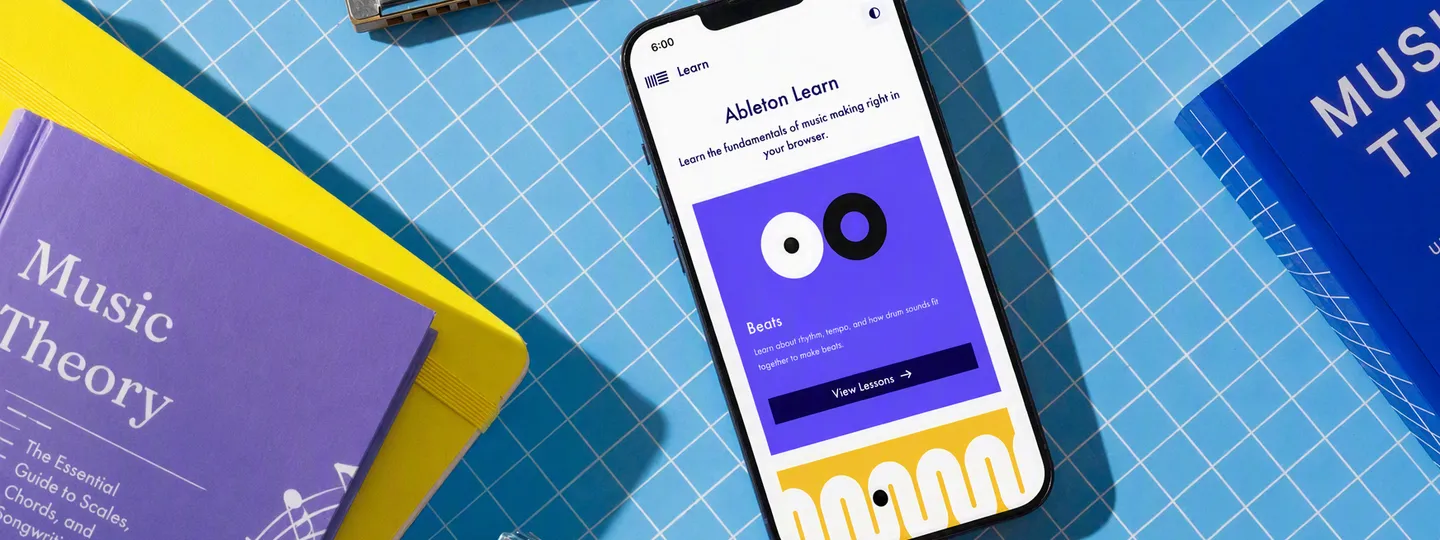
Ableton Learn
Ableton Learn had long introduced beginners to the basics of music-making as a standalone browser experience. For its next chapter, it become a more connected entry point into the Ableton ecosystem, helping people not only understand music, but build the confidence and familiarity to continue making with Ableton’s tools.
Visit WebsitesThe Brief
How might we structure Learn to help beginners understand musical ideas, apply them through making, and naturally continue their creative journey within the Ableton ecosystem?
An interactive learning platform that combines structured courses, artist-led lessons, and Playground, giving beginners different ways to learn and a space to apply musical ideas through making. Familiar Ableton interaction patterns make the transition towards more capable music-making tools feel approachable.
Designing the path from learning to making
Learn was created to help beginners move from understanding music to making something of their own. I designed a gradual journey from guided interactions and hands-on exercises to open-ended creation in Playground, using familiar Ableton patterns to help learners carry their musical understanding into more advanced music-making tools.
Reframing learning as a flexible course system
I turned a linear learning path into short, focused courses that combine guidance with hands-on exercises. Learners can build skills step by step or jump directly to the concept they need. Courses take around 5–8 minutes on average, and testing confirmed that this format worked as intended.
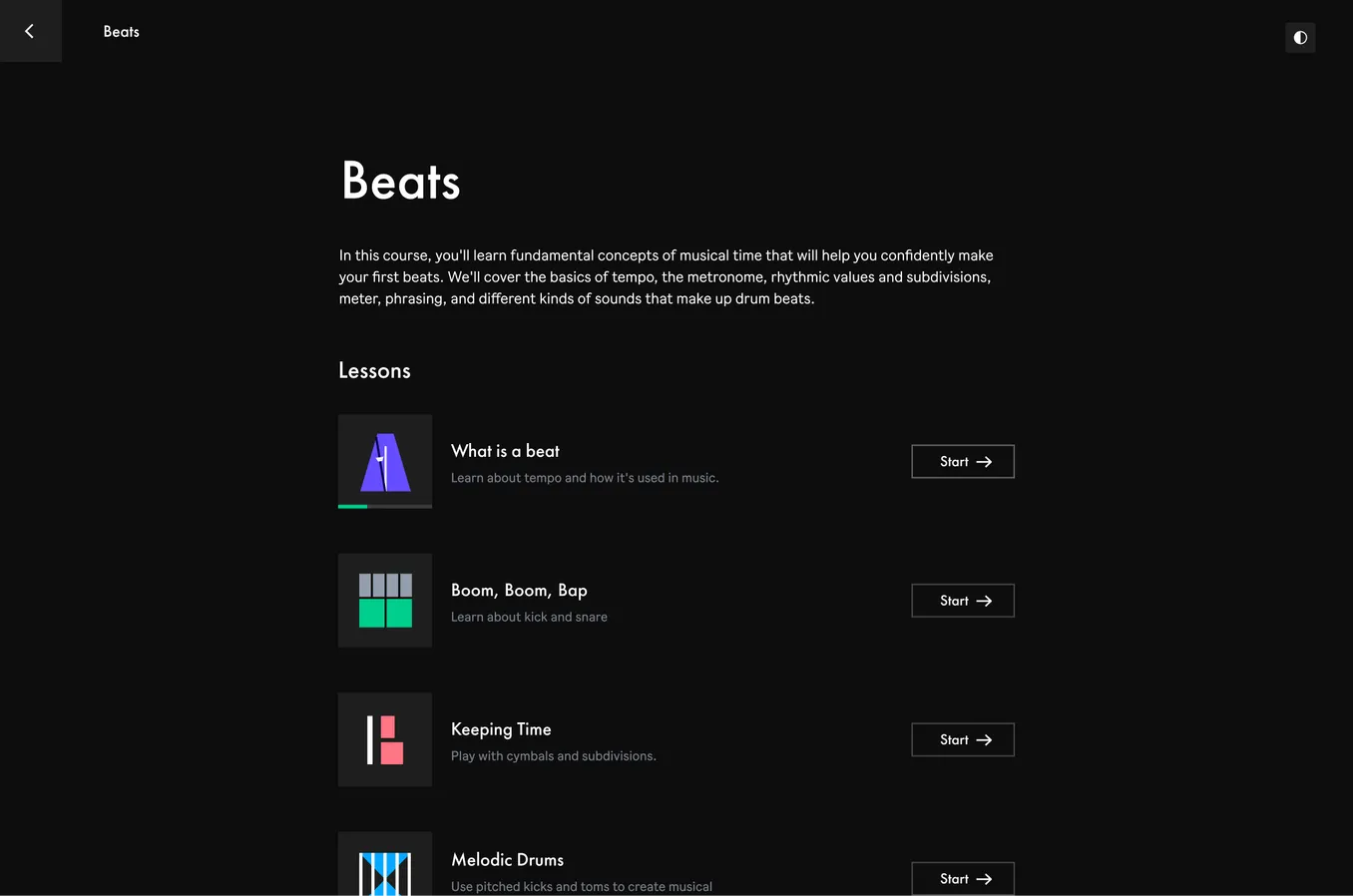
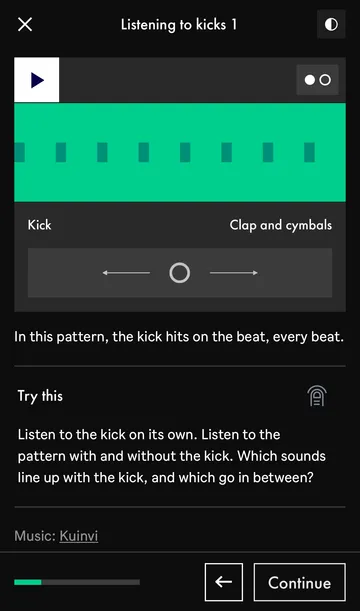
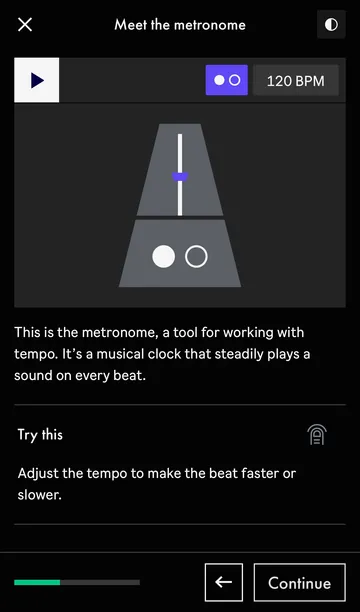
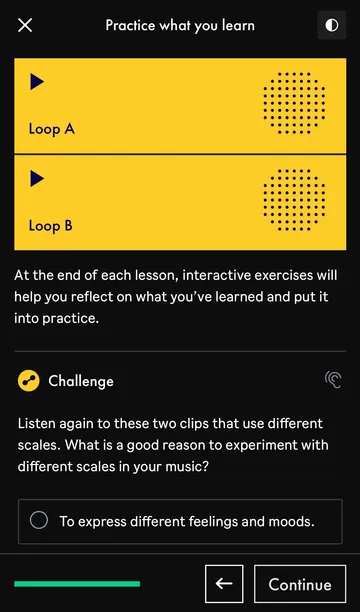
Making musical ideas tangible
I collaborated with our Content Designer, to design each course panel around one core interaction tied directly to the lesson. By combining interaction, sound, colour, and layout, I made musical ideas easier to grasp through playful exploration. This gave learners a more intuitive way to connect concepts with action, while giving the team a reusable system for creating new lessons more consistently.
Building an AI-native design workflow
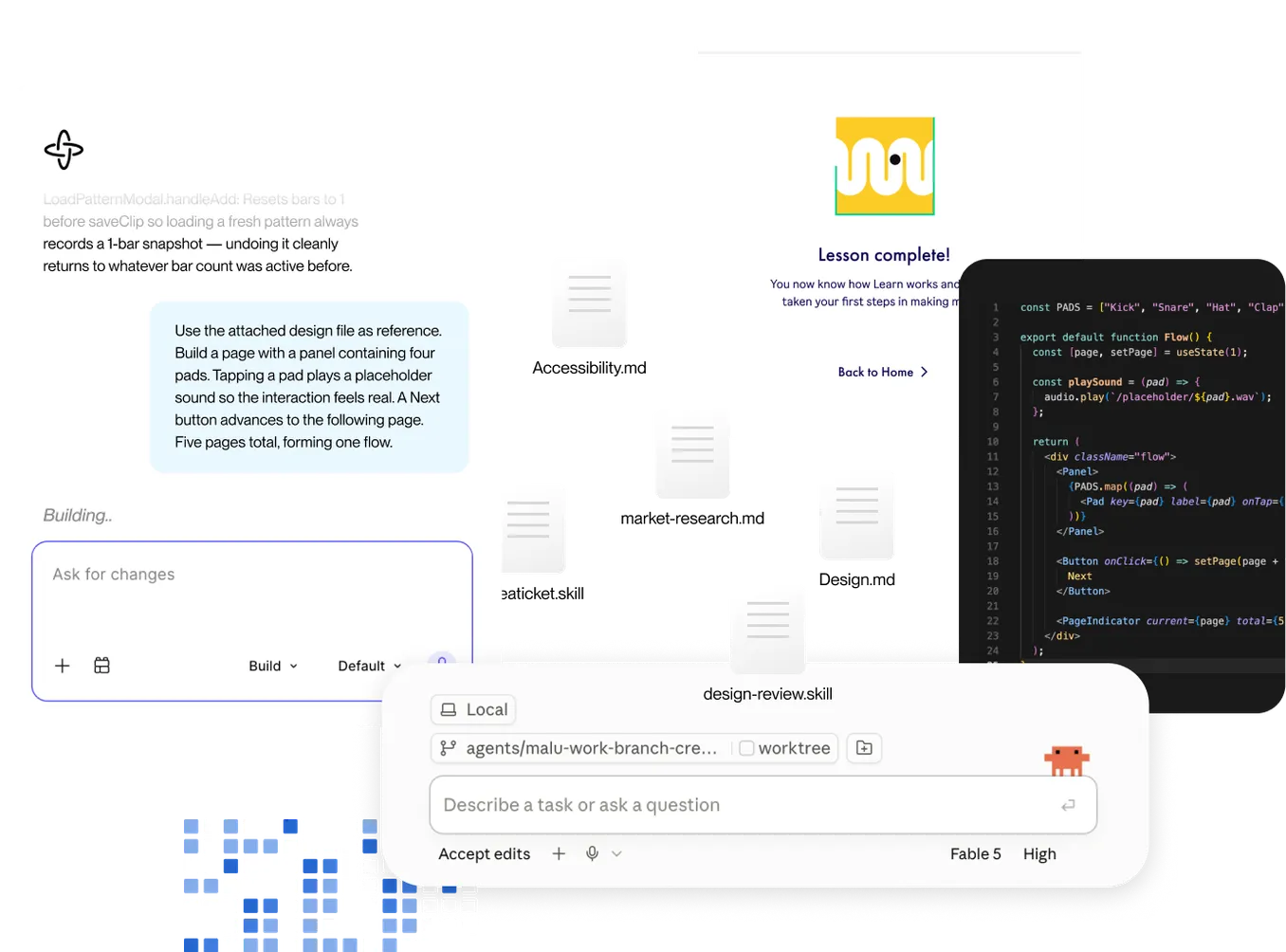
I have been exploring how AI can support my workflow, from early concepts and visual directions to interactive prototypes in the codebase. As the tools evolve quickly, each project becomes a chance to test new ways of moving between ideas, design, code, and feedback.
Learning from launch
We are currently in a soft launch, so the data is still limited. Even so, Mitzu is already revealing useful signals: which pages hold attention, where learners are most likely to drop off, and how many continue exploring in Playground. I work closely with our researcher to turn these signals into focused design updates, then monitor how each change affects the experience and the data. Below are a few of the early signals we tracked in the first month.
0 min
Average course completion time
0%
Course completion rate
0
Daily active learners
0%
Playground export rate
What’s next
The platform is now in place. My next focus is expanding the course and content library, developing more artist-led features, and continuing to evolve Playground as Ableton’s first lightweight music-making tool available across the ecosystem. I will keep exploring larger opportunities around continuity and the wider Ableton ecosystem, helping learners move more naturally from learning a concept to making music with Ableton’s tools.
Brigid-Anne Gilbert, Jack Schaedler, Chris Peck, Guy Purssell, Matthias Kleine, Johan Sverredal, Maya Shenfeld, Barbara Bencze, Hal Churchman